










 %service-partner-advantages-list%
Are Eco Tyres Really Better for the Environment?
14/05/26
Author: Eiretyres Team | Reading Time: 5 minutes
Quick Overview of This Article
- What Makes a Tyre “Eco-Friendly”?
- The Environmental Benefits of Eco Tyres: What the Data Shows
- Manufacturing and Materials: Are They Really Greener?
- Do Eco Tyres Affect Performance and Safety?
- Do Eco Tyres Save Money and Reduce Environmental Impact?
- How Do Eco Tyres Help Reduce Tyre Waste?
- Are Eco Tyres Worth It?
- Frequently Asked Questions About Eco-Tyres
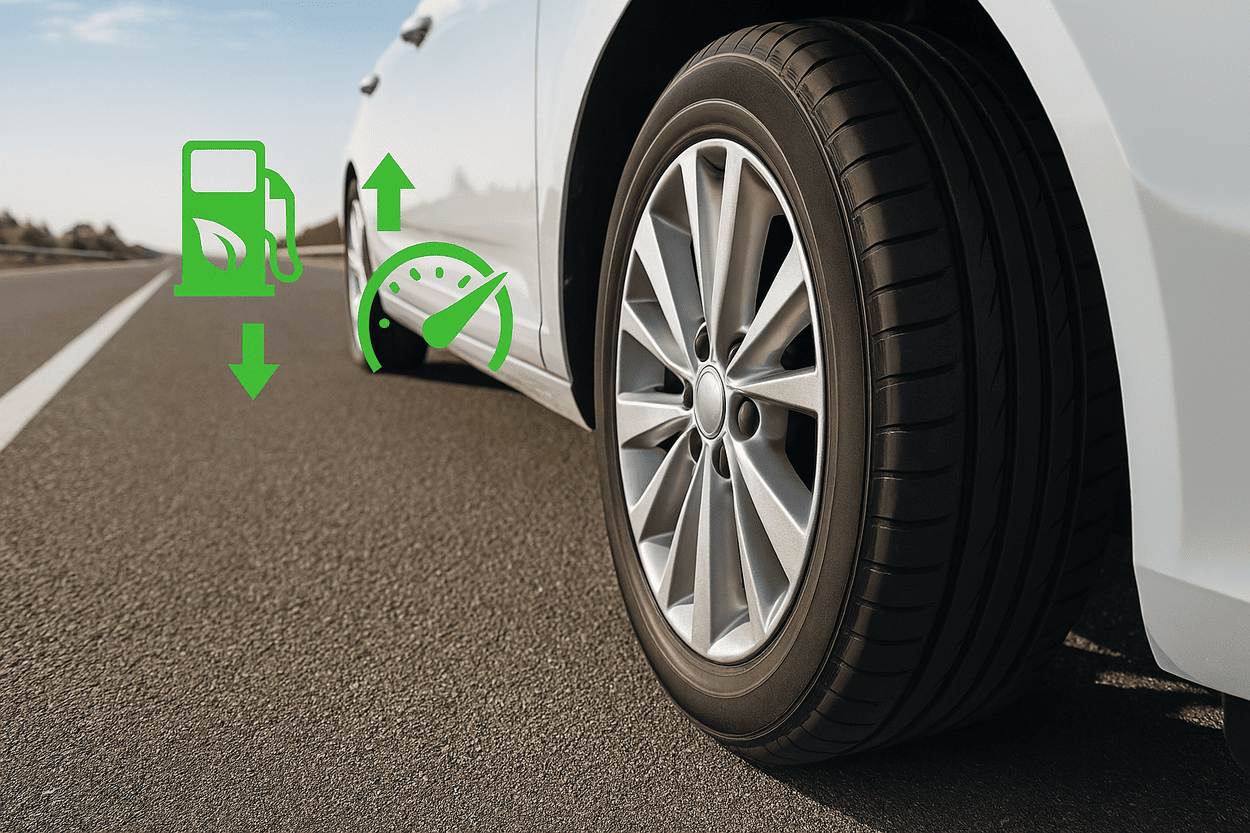
Europe is going green fast! We see more electric vehicles and cleaner rules. Everyone wants their car to be better for the planet, and that includes the tyres. Companies are making these new green tyres and calling them 'eco' or sustainable tyres. They promise lower pollution and better mileage because they're fuel-efficient tyres (that means they have low rolling resistance). But here's the million-dollar question: Are these environmentally friendly tyres really the bee's knees, or is it just fancy talk? Let's check the facts to see if they make a real difference.
What Makes a Tyre “Eco-Friendly”?
Forget the tree-hugging promises. When a manufacturer slaps an "eco" badge on a tyre, what they're actually talking about boils down to two things that make a real difference to your wallet and your drive: structural engineering and compound chemistry.These tyres often incorporate sustainable or renewable materials, such as natural rubber, silica derived from rice husks, or plant-based oils that replace petroleum-based compounds. Some manufacturers also use recycled rubber or bio-based polymers to reduce reliance on fossil resources. The most critical piece of the puzzle is reducing Hysteresis (The internal energy loss caused by continuous deformation of the tyre's structure during rotation). This is a fancy term for what we call Rolling Resistance (The force required to keep the tyre moving forward).
Manufacturers are fighting this friction with Low Rolling Resistance (LRR) Architecture (An optimized internal structure, carcass design, and bead construction that minimizes deflection and heat generation). Translation? Less drag means less fuel burned, or, if you're driving an EV, less anxiety about the charging point. First, the big deal is low rolling resistance. Think of it like this: regular tyres are fighting the road a lot, which makes your engine work harder and drink more gas. Eco tyres (or green tyres) roll easier, like a skateboard on a smooth sidewalk. This saves fuel (making them fuel-efficient tyres) and gives your EV (electric car) more miles per charge.
Then there's the compound. Traditional tyres are petroleum junkies, but the "green" models use sophisticated molecular replacements. We're talking about dumping the cheap fillers for High Dispersible Silica (HDS) Formulation (A specific silica compound that chemically bonds better with the rubber polymers), which reduces energy loss without destroying your Wet Grip (The tyre's traction performance on damp or saturated asphalt).
You'll also find Bio-Based Oils (Compounds derived from vegetable sources like soybean or rapeseed that replace petro-chemicals) and, increasingly, Recovered Carbon Black (rCB) (Carbon black pigments reclaimed from end-of-life tyres using pyrolysis). This isn't just PR; it's a genuine shift in material science that makes the tyre better and slightly less terrible for the planet.
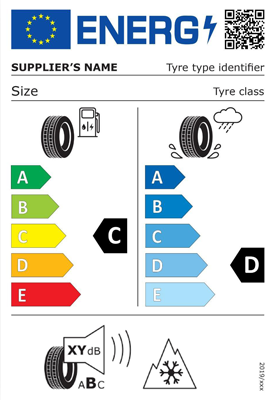
In the EU and UK, the EU tyre label helps consumers compare environmental performance. The label rates tyres on fuel efficiency, wet grip, and external noise. Eco tyres typically score well in the fuel-efficiency category, which is a strong indicator of their environmental benefits. If you can't be bothered to parse the spec sheet, just look at the EU Tyre Label. The grade listed under Fuel Efficiency (A measurement directly correlating to rolling resistance) tells the real story. Everything else is just noise.
The Environmental Benefits of Eco Tyres: What the Data Shows
When it comes to hard data, the standout advantage of eco tyres is lower fuel consumption, and we've suspected this for a while. Now the numbers are in to confirm it.
Rolling resistance is, in a very real sense, your biggest invisible tax at the pump. For passenger cars, it accounts for up to 20% of total fuel consumption. For light-duty trucks, that figure climbs to 30–40%. So when an eco tyre trims that number meaningfully, the ripple effect across a vehicle's lifetime is genuinely significant. According to Michelin's rolling resistance data, a 30% increase in rolling resistance generates between 3% and 5% of fuel overconsumption, which is the reverse math being equally straightforward: shrink resistance, shrink your fuel bill.
The EU already figured this out and made it policy. Per the European Commission's tyre efficiency data, back in 1990 fuel losses due to tyre rolling resistance sat at 2.22 litres per 100 km per vehicle. By 2020, the tyre labelling regulation had driven that down to 1.16 L/100km - a 7.2% improvement, projected to hit 9.4% by 2030. In absolute terms, the regulation saved around 3.2 billion litres of fuel in 2020 alone. That's not a rounding error, and that's a serious structural shift in European fuel consumption, driven largely by putting an energy rating sticker on a tyre.
The gap between the best and worst rated tyres on the EU's A-E scale is not academic, either. According to the European Commission, the difference between an A-rated and an E-rated tyre can be as much as 7.5% in fuel efficiency terms, and over a tyre's lifetime that translates to around 80 litres of fuel in a combustion-engined car. Those are real litres, not spreadsheet projections.
Across the typical lifespan of a tyre (roughly 30,000 to 50,000 km) this translates into a significant reduction in CO₂ and meaningfully lighter running costs for motorists across the UK, Ireland, and Europe.
The noise angle is real too
Eco tyres also focus on producing less road noise, and here again the data holds up. An eco tyre is likely to be quieter than a standard summer or high-performance tyre, with exterior noise measured in decibels and rated from A to C on the EU label. In crowded European cities where noise pollution has become a genuine public health issue, that decibel reduction is more than a selling point; it's a measurable improvement in urban quality of life.
The materials story is changing too
The other win is the shift away from petroleum-based compounds. Some eco tyres now incorporate sustainable materials such as natural rubber and organic cotton to reduce their environmental impact, while others are specifically designed to cut CO₂ emissions during production. Old-school tyres are essentially petroleum junkies. These greener alternatives are swapping oil derivatives for plant-based bio-oils and recycled compounds (a shift that lessens the blow of raw material extraction and backs a more sustainable circular economy).
For EV drivers, the stakes are even higher
If you're behind the wheel of an electric vehicle, the perks of an eco tyre are even more obvious , and more quantifiable. The 2026 Auto motor und sport eco tyre test, conducted on both a conventional Hyundai i20 and a battery-electric Hyundai Inster, put this into sharp relief. Real-world energy consumption measured on a 10 km urban circuit showed the most efficient tyre consuming 9.9 kWh/100km against 11.1 kWh/100km for the least efficient (a difference of over 10%, translating to 39 km of extra range). Thirty-nine kilometres. For just switching tyres.
A separate Auto Zurnal test from April 2026, run on a Volkswagen ID.3, arrived at very similar conclusions. Real-world energy consumption at a constant 80 km/h ranged from 12.86 kWh/100km for the most efficient tyre to 14.40 kWh/100km for the worst (a 12% spread that directly tracks with rolling resistance lab results). That's not a test artefact. That's the road telling you the same thing the test did.
As ScienceInsights noted in March 2026, rolling resistance now accounts for approximately 20% of combustion vehicle fuel consumption and 25% of EV energy consumption, and in a segment where every extra kilometre of range matters to buyers still wrestling with range anxiety, the tyre choice is one of the few meaningful levers they actually control.
Most EV-specific tyres are built with these exact eco-friendly principles as their foundation, and 2026's test data confirms that investment pays off in range, not just in principle.
Manufacturing and Materials: Are They Really Greener?
Let's be honest: tyre manufacturing is a massive energy hog, and no tyre (eco-friendly or otherwise) is truly 100% "green." However, the industry is finally moving the needle, using clever innovations in materials and production to ditch old, dirty habits.
Modern eco tyres are leaning hard on High Dispersible Silica (HDS) Formulation. This tech swaps out traditional carbon black for a compound that bonds better with rubber polymers, slashing internal friction and heat. The result? Lower rolling resistance, which is just a fancy way of saying the tyre rolls easier.
This directly cuts your fuel consumption and CO₂ output, while actually boosting Wet Grip and durability, which is a win-win for safety and efficiency.
Manufacturers are now raiding the pantry for sustainable materials, incorporating things like:
- Recycled Rubber reclaimed from end-of-life tyres.
- Bio-Based Oils derived from soybean, rapeseed, or sunflower crops.
- Natural Rubber sourced from certified, sustainable plantations.
- Dandelion and Guayule Rubber, helping to protect tropical forests.
- Pine Resin and Biomass Polymers that replace petroleum-based synthetics.
- Recycled Steel and Textiles used to strengthen the tyre's internal skeleton.
These aren't just "feel-good" additions. By ditching petroleum-heavy ingredients and embracing circular-economy principles, brands are significantly lowering the carbon footprint of every tyre before it even hits the road.
Another breakthrough is Advanced Mixing Technology. By blending silica and polymers at lower temperatures, factories use less energy and create a more consistent compound. This translates to better performance and a longer lifespan for your rubber.
The actual Low Rolling Resistance Architecture is also key. Designers are optimizing tread patterns and sidewall stiffness to stop energy from leaking away as heat during rotation. Less deformation means less fuel burned; it's that simple.
Finally, look at the Specialized Curing Process, which uses precision controls to save energy without compromising strength. Many eco-models also support Retreading, allowing you to replace just the worn tread rather than binning the whole tyre (a massive win for reducing waste). While some brands are still catching up, premium names like Michelin, Continental, and Pirelli are leading the charge. The path to a perfectly sustainable tyre is long, but these innovations show we're finally heading in the right direction.
Do Eco Tyres Affect Performance and Safety?
A major point of contention for many motorists is whether swapping to eco-friendly rubber means sacrificing safety or performance. While early iterations might have felt like a compromise, modern green tyres have closed the gap significantly through superior material science.
For your standard daily grind (whether that involves city traffic, motorway cruising, or navigating mixed European weather), these tyres are more than up to the task. You can expect dependable traction, predictable feedback, and a decent lifespan from your investment.
That said, there are a few tactical trade-offs to keep in mind:
- You might see slightly longer braking distances on soaked asphalt compared to high-end performance models.
- If you live for sharp cornering and sporty feedback, you’ll likely find specialized performance rubber more to your liking.
- These tyres are engineered for maximum efficiency, not for aggressive or track-style driving.
The silver lining? The EU Wet-Grip Rating takes the guesswork out of the equation. Plenty of eco-friendly models now secure top-tier grades, proving that you can prioritize the planet without compromising on road safety.
Do Eco Tyres Save Money and Reduce Environmental Impact?
While eco tyres often come with a slightly higher upfront price tag, they are a solid long-term investment. The lower fuel consumption triggered by low rolling resistance helps to offset that initial cost, making them especially attractive for high-mileage motorists across the UK and Europe.
Many models also boast a longer lifespan due to optimized tread compounds, providing even better value for your money. For electric vehicle owners, this boosted efficiency translates into a noticeably longer range per charge, which is a massive everyday perk for going green.
Of course, your mileage may vary. Real-world savings are heavily dependent on your driving style, vehicle type, and road conditions. If you have a heavy right foot or neglect your tyre maintenance, you might see those efficiency gains start to evaporate.
How Do Eco Tyres Help Reduce Tyre Waste?
Europe is grappling with a massive mountain of tyre waste. With millions of units hitting their end-of-life every year, the pressure is on to fix a tyre recycling infrastructure that, frankly, varies wildly from one country to the next.
Choosing eco tyres is a smart move here, as their optimized tread compounds mean they stay on the road longer, indirectly keeping rubber out of the bin. Meanwhile, the industry is cooking up some seriously clever tech to close the loop:
- Rubber Granulate for Sports Surfaces: Old tyres are being shredded into rubber granulate, which finds a second life in playground flooring, running tracks, and artificial turf. This keeps huge volumes of waste out of landfills while creating durable, weather-resistant public spaces.
- Pyrolysis to Recover Oils and Carbon Black: This oxygen-free heat treatment breaks tyres down into their base components. The real prize is Recovered Carbon Black (rCB), which can be dumped right back into new tyre production, slashing the need for virgin materials and supporting a genuine circular-economy.
- Research into Fully Recyclable Tyres: Brands are now exploring modular designs and bio-based polymers that allow a tyre to be completely dismantled and rebuilt without losing quality. This research into thermoplastic elastomers and easy-separation layering could eventually end tyre waste for good.
Across the UK, Ireland, and the EU, regulations are getting tougher, forcing the industry to ditch old habits and embrace a cleaner, more sustainable future for every piece of rubber on the road.
Are Eco Tyres Worth It?
In the grand scheme of things, absolutely. Eco tyres deliver genuine environmental benefits, largely by slashing fuel consumption and boosting efficiency. While they aren't a magic bullet (manufacturing still leaves a mark and performance can vary) they represent a significant leap toward a cleaner way to drive.
For motorists in the UK, Ireland, and across Europe, switching to eco tyres is a savvy, practical move to lower your footprint without ditching reliable performance. Our advice? Dig into the EU Tyre Label, weigh up the brands, and align your choice with your driving style. They might not save the planet single-handedly, but for the modern driver, they're clearly the responsible way forward.
Frequently Asked Questions About Eco-Tyres
Are eco tyres really better for the environment?
Yes, eco tyres can genuinely reduce fuel use, CO₂ emissions, and tyre-related waste, because they are designed to use less energy while driving, mainly because they have lower rolling resistance.
Do eco tyres save fuel?
Yes. Eco tyres are designed to roll with less resistance, so the engine does not need to work as hard. This can help petrol and diesel cars use less fuel, especially over longer distances.
Do eco tyres affect safety?
Not necessarily. Modern versions can deliver solid wet grip and dependable braking. Just check the EU tyre label before buying, especially the wet-grip rating.
Are eco tyres more expensive?
Eco‑tyres are typically 5-25% more expensive than standard tyres, depending on brand, size, and whether the model uses advanced low‑rolling‑resistance compounds.
Are eco tyres worth buying?
For most everyday drivers, yes. They save energy, reduce emissions, can improve EV range, and still deliver the kind of grip and comfort you need for normal road use. They’re not magic, but they’re a smart upgrade.
14/05/26
Are Eco Tyres Really Better for the Environment?
Eco tyres can cut fuel use and CO₂ while keeping everyday performance. Read our guide to see if they’re right for your next tyre change.
Read more
Read more
28/04/26
What Is Wheel Balancing and Why It Matters for Your Tyres
Wheel balancing ensures an even weight distribution across your tyres, preventing vibrations, uneven wear, and reduced driving comfort. This article explains how imbalance occurs, the signs to watch for, and why regular balancing is essential for safety, efficiency, and long-term tyre performance.
Read more
Read more
14/04/26
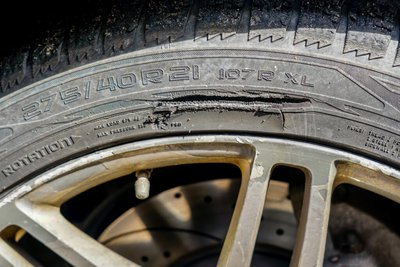
What Causes Tyre Sidewall Damage and How to Prevent It
Read more
Tyre sidewall damage can result from kerbs, potholes, low pressure, or ageing. It often leads to serious safety risks and cannot be repaired. Regular checks, correct inflation, and careful driving help prevent damage and extend tyre life.
Read more

24/03/26
What to Consider When Buying Tyres Online
Read more
Buying tyres online can save money and time, but only if you know what to look for. From choosing the right size to avoiding hidden costs and unreliable sellers, a few key checks make all the difference. This guide highlights what to consider for a confident purchase.
Read more
09/03/26
Tyre Wear, Microplastics, and the Future of Sustainable Tyre Technology
Read more
Tyre wear releases tiny particles that can become microplastics in the environment. This article explains what tyre wear particles are, why they represent an environmental challenge, and how the tyre industry is developing more sustainable technologies, new materials, and designs that reduce environmental impact.
Read more
20 of 20 News