

%service-partner-advantages-list%
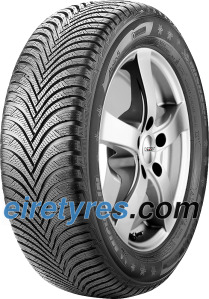
Michelin Alpin 5 195/65 R15 91T
Michelin
Alpin 5
195/65 R15 91T
Michelin - High-quality premium French tyres from Michelin.
| auto motor und sport |
- Manufacturer description
- Tire Label
- Test results
- About Michelin
- General Product Safety (GPSR)
Delticom Product Description
Winter Warrior: The MICHELIN Alpin 5 Tyre
Say hello to the MICHELIN Alpin 5, the tyre that keeps you glued to the road, no matter how nasty winter gets. This is not just any winter tyre; it's your best bet for tackling snowy streets and icy roads with confidence.Why You'll Love It:
- Top-Notch Winter Grip: It's got serious chops when it comes to handling snow and slush, thanks to a clever tread design that includes extra blocks and sipes for better traction.
- Built to Last: Rain or shine, or snow for that matter, this tyre holds up. It's made to perform well even as the mercury drops.
- Steers Like a Dream: With cutting-edge sipes that lock into place, you'll notice your car handles like it's on rails, even on slippery surfaces.
Cool Features to Check Out:
- Slick in the Wet: The new tread pattern features grooves that whisk away water fast, dramatically reducing the risk of hydroplaning.
- Smart Tech: The tread mix includes a special compound with sunflower oil (yep, sunflower oil!), which keeps the tyre flexible in the cold, ensuring top performance.
With the MICHELIN Alpin 5, you're not just ready for winter; you're all set to dominate it. Enjoy peace of mind and a smooth ride, whether you're dealing with a light dusting or a full-blown snowstorm. Let it snow!
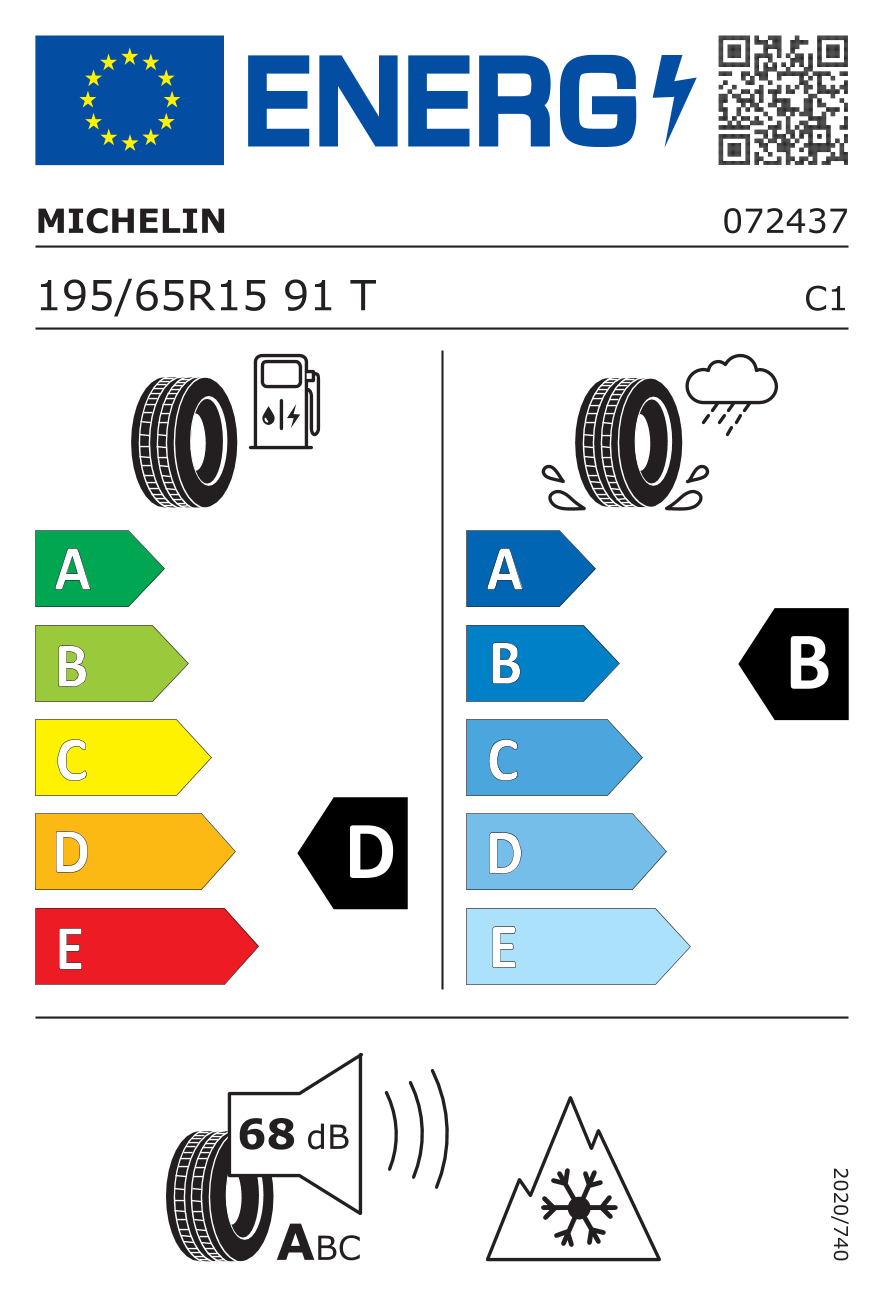
EU Tyre Label and Efficiency Classes
The Tire Labeling Ordinance specifies the information requirements on fuel efficiency, wet grip and external rolling noise from tires. In addition, reference is made to the winter properties of the product.
The EU 1222/2009 regulation that has been in force since November 1st, 2012 has been revised and will be replaced by regulation EU 2020/740 from May 1st, 2021; From this point on, new requirements apply. The rating classes for fuel efficiency, wet grip and exterior noise have been changed and the layout of the EU label has been adjusted. The manufacturer's product data sheets stored in the EU database can be downloaded via a QR code integrated into the label. Information on snow grip and ice grip is also newly included for tires that meet these criteria.
The following tires are exempt from the regulation: - tires that are designed exclusively for installation on vehicles that were first registered before October 1, 1990 - retreaded tires (until a corresponding extension of EU VO 2020/740 has taken place) - professional off - Road tires - Racing tires - Tires with additional devices to improve traction, eg studded tires - T-type emergency tires - Tires with a permissible speed below 80 km/h - Tires for rims with a nominal diameter ≤ 254 mm or ≥ 635 mm
The criteria and evaluation classes at a glance
fuel efficiency
The fuel consumption depends on the rolling resistance of the tyres, the vehicle itself, the driving conditions and the driving style of the driver. The measured rolling resistance (rolling resistance coefficient) of the tire is divided into classes A (highest efficiency) to E (lowest efficiency).
If a vehicle is completely equipped with class A tires, a consumption reduction of up to 7.5%* is possible compared to class E tyres. In the case of commercial vehicles, it can even be higher.
(Source: European Commission Impact Assessment
* when measured according to the test methods set out in Regulation (EU) 2020/740)
Please note:
Fuel consumption depends to a large extent on your own driving style and can be significantly reduced by driving in an environmentally friendly manner. Tire pressure should be checked regularly to improve fuel efficiency.
wet grip
Wet grip is divided into classes A (shortest braking distance) - E (longest braking distance).
If a car is equipped with class A tires, compared to class E tires, a braking distance of up to 18 m can be reduced when braking from 80 km/h (on a road surface with average grip).*
*Source: wdk Economic Association of the German Rubber Industry eV
Please note:
Traffic safety depends to a large extent on your own driving style. The stopping distances must always be observed. Tire pressure should be checked regularly to improve wet grip.
External rolling noise
The noise emitted by a tire affects the overall volume of the vehicle and affects not only your own driving comfort, but also the noise pollution of the environment. In the EU tire label, the external rolling noise is divided into 3 classes from A (lowest rolling noise) - C (highest rolling noise), measured in decibels (dB) and compared with the European noise emission limit values for external tire rolling noise.
A
The pictogram with the classification "A" indicates that the tire's external rolling noise is more than 3 dB below the EU limit value in force until 2016.
B
The "B" classification means that the tyre's external rolling noise is up to 3 dB below or equal to the EU limit value in force until 2016.
C
The classification "C" indicates that the specified limit value is exceeded.
| Review Date | Test Facility | Dimensions | Review Text | Review Rating | Seal |
|---|---|---|---|---|---|
| 09/2014 | auto motor und sport | 195/65 R15 91T | Recommendable Strength: Very good stopping distance and docile handling on snow, as well as short stopping distances and pronounced good handling in the wet, good aquaplaning prevention, good driving comfort. Weakness: Slight deficits in the dynamic dry disciplines, rolling resistance somewhat high. |
Michelin – we take you further.
The vision of our founders, Edouard and André Michelin, has guided the development of the MICHELIN brand for more than 125 years: making driving as simple, safe, and comfortable as possible – first with innovative tires and wheels, followed by road maps, travel guides, and contributions toward improving traffic infrastructure. Along with this comes a strong engagement with the environment, as modern mobility must be sustainable and not detrimental to the environment.
Each year the Michelin Group produces more than 178 million tires in 68 production facilities in 17 countries, and it operates sales networks in more than 170 countries. The product offerings are many: from bicycle, passenger car, truck, motorcycle, and tractor tires, to tires for 5-ton earth- moving machines. Michelin employs 111,700 people worldwide and owns one of the oldest, most famous trademarks in the world – the legendary Michelin Man.
Targeted development: MICHELIN Total Performance
In the development of new products, Michelin faithfully pursues the concept of "MICHELIN Total Performance", backed by the rigorous standard of always bringing together a number of performance characteristics into a tire, to achieve optimal results. We follow this philosophy not only in the development of our standard products, but also in motorsports. Numerous technical innovations help to relieve burdens on the environment, drivers, and businesses. Hidden out of sight in tire casings, tread designs, and rubber compounds, throughout their lives MICHELIN tires show their full potential: they offer excellent grip, long life, and reduced fuel consumption thanks to their low rolling resistance.
To better understand the conditions which tires are subjected to in everyday use, in the summer of 2014 Michelin began a unique research project – the Road Usage Lab. Vehicles from 3,000 drivers in Europe were equipped with special measurement devices to record data about the tires' use. These valuable findings are being employed in the development of future tire models, making them better suited to the needs of real drivers.
MANUFACTURE FRANCAISE DES PNEUMATIQUES MICHELIN
Place des Carmes-Déchaux 23, 63000 Clermont-Ferrand, France