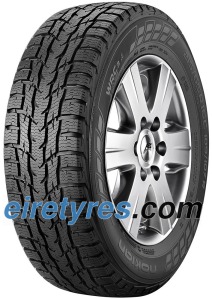
Maximum winter safety
New Nokian WR C3 van tyre delivers unfailing performance for the European winter
The new Nokian WR C3 tackles the extremes of winter with its precise winter grip. This efficient roller is designed for versatile use on delivery vehicles and vans, and it drives safely, durably and lightly on the urban streets and country roads of Central Europe. In addition to the passenger car-like driving comfort and very low rolling resistance, this new product optimises the safety-enhancing handling properties on icy, snowy and wet roads. These are highly valued by professional drivers.
The comprehensive size selection of the Nokian WR C3 offers versatility and high performance, and it is tailored for modern vehicles. The inventor of the winter tyre offers a selection of 22 products, all the way from 14 inches up to 17 inches. The new product family uses one tread pattern for both the lighter and heavier vehicles. The new Nokian WR C3 will be available at tyre retailers in the autumn of 2015.
Balanced and precise
The new Nokian WR C3 has a reassuringly firm grip on the rapidly changing Central European winter weather. The sturdy new product retains its grip and steering feel on snowy and slushy roads alike. The safety features and durability of the new product were ramped up by using a tread pattern tailored for varying winter conditions, a next-generation rubber compound and a number of structural innovations.
The balanced handling is supported by numerous inventions that have been relentlessly tested by the inventor of the winter tyre. A denser sipe mesh covers the aggressive directional tread pattern. Wider individual sipes provide much-needed grip surface as the friction of the road varies.
In order to maximise grip at higher speeds and under surprising conditions, the tread blocks on the shoulder have pocket-like sipes. The sipes remove, or even pump, water out of the road surface, ensuring stable and sure grip. These patented pump sipes especially boost wet grip.
The unified centre rib and bound centre area of the symmetrical tread pattern promote driving stability. Years of development ensures a more even wear pattern, providing added safety as the tyre ages. Winter tyres installed on driving wheels will most likely wear out in the centre area first.
The carefully considered and tested block geometry in the tread pattern of the smooth Nokian WR C3 can be seen in its excellent handling on grooved roads. The precise handling also helps the driver to observe any changes in the level of friction, and to react in time.
Tailored rubber compound improves wear resistance
The durable tread compound is tailored for demanding and varying use on vans, and it can safely master the high temperature differences that are typical of the Central European winter. The rubber compound uses plenty of natural rubber as well as canola oil in order to improve winter grip and tear strength.
This new rubber compound allows the sturdy Nokian WR C3 to achieve exceptional grip on snowy and wet roads as well as excellent wear resistance. The sipes on the tread blocks work actively regardless of variations in grip level and temperature. The tailored rubber compound also significantly reduces wear resistance, which in turn saves fuel.
A special Clinch rubber compound was also developed for the bead area of the tyre. The rubber compound presses flexibly against the wheel flange, providing the bead area with more durability when moving massive loads. This innovation also successfully minimises the interior noise of the vehicle.
Sturdy structure is suited for hard use
In addition to the tread pattern, the stable and silent driving behaviour of the Nokian WR C3 is also due to its sturdy structure. The extremely strong new double steel belt structure can tolerate hard use and reliably carry even high wheel loads.
The new, more flexible steel wire used for the steel belts improves puncture protection. This also reduces rolling resistance, which translates into smaller fuel consumption. The steel belt structure also reduces heat generation, further improving wear resistance.Additional safety and comfort
Indicators on the tread provide increased comfort and add to safety The Driving Safety Indicator (DSI) developed and patented by Nokian Tyres displays the remaining amount of tread surface on the tyre’s main grooves in numbers. The numbers wear out as the tyre wears down. The Driving Safety Indicator is now standard equipment on all Nokian winter tyres. The snowflake symbol (Winter Safety Indicator, WSI) also indicates the winter safety of the tyre. It remains visible to a groove depth of four millimetres.
The sidewall information area has location and pressure indicators. The information area allows for recording the correct inflation pressure and installation location during a tyre change. Safety is improved further by a new section that can be used to record the tightening torque of the wheel nuts for alloy wheels.
Correct tyre pressure is especially important in commercial driving and under heavy loads. Correct tyre pressure improves the driving feel of the car, ensures the structural durability of the tyre, and reduces fuel consumption.
New Nokian WR C3 – Tough performance
- Maximum winter safety and comfort
- Precise and stable handling
- Excellent durability, even with heavy loads
Main innovations:
Pump sipes. More grip on wet and icy surfaces. The pocket-type sipes on the tyre shoulder remove, or even pump, water out of the road surface, ensuring stable and sure grip.
Tailored tread pattern. More driving stability. The unified centre rib and bound centre area of the symmetrical tread pattern promote driving stability. Precise handling. Even wear pattern.
Tread compound adjusted for the varying weather. More safety, durability and fuel efficiency. The winter compound optimised for heavy use works safely across a wide temperature range and reduces rolling resistance. The compound achieves exceptional winter grip, lower fuel consumption and excellent wear resistance.
Special Clinch rubber compound. Optimised durability. The rubber compound presses flexibly against the wheel flange, providing the bead area with more durability. The innovation also effectively minimises the interior noise, since it dampens the vibrations from the tyre body, preventing them from passing into the tyre and further inside the vehicle.
Sturdy steel belt structure. Driving stability and durability. In addition to the tread pattern, the stable and silent handling is attributable to the sturdy structure. The extremely strong double steel belt structure can reliably carry even high wheel loads. The new, more flexible steel wire used for the belts improves structural durability and allows the tyre to maintain its state-of-the-art properties. This also reduces rolling resistance, which translates into lower fuel consumption.
Dense sipe mesh. Optimal grip and handling. The aggressive tread pattern is covered by a denser sipe mesh. Wider individual sipes provide in the centre area much-needed grip surface, especially when friction is at its lowest.
.













 %service-partner-advantages-list%