









 %service-partner-advantages-list%
Nokian WR A4 245/35 R20 95W XL
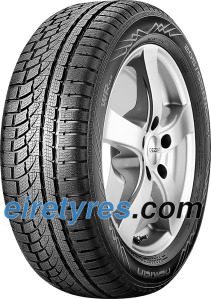


Note: Prices apply to tires without rim. Depending on the tire dimension, the tread pattern may vary.

Nokian
WR A4
245/35 R20 95W XL
Nokian - Finnish tyre manufacturer. Guarantees high-performance at mid-range prices and specialises in snow tyres.
Tyre size
245/35 R20 95W XL
Change
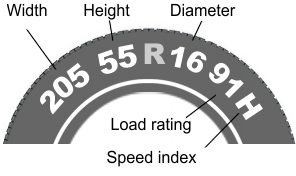
Identify the size of your tyre
The exact dimensions of a tyre can be found on the sidewall printed mark. The graphic shows how to read properties and dimensions of the tyre:
Stock Level
at the moment, this product is not in stock
Type of Tyre
Winter tyres
M+S marking
with snow flake symbol
Winter tires
with snowflake symbol
Speed Index
W
:
Approved up to
270 mph
EAN
6419440210759
Item No.
R-323634
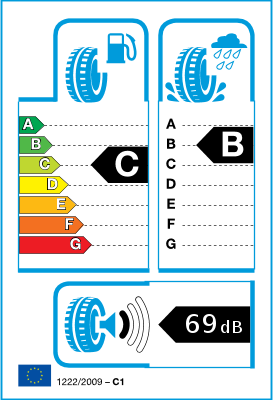
EU Tyre Label
- Manufacturer description
- Tire Label
- General Product Safety (GPSR)
New Nokian WR A4 – Forget the Forecasts
- Advanced winter grip on dry, wet and snow-covered roads due to Functional Performance Siping
- Extremely stable and balanced high-speed performance
- Maximum comfort
Main innovations:
Functional Performance Siping. More winter grip, better steering feel. Each tread block and sipe in the stylish tread pattern has a precise shape and role, and this can be felt in the excellent grip and handling properties. The stiff outer shoulder, the Centipede Siping in the centre area and the zone-optimised siping all form a controlled combination that allows the Nokian WR A4 to roll safely and comfortably in varying Central European winter weather.
Centipede Siping. Maximum snow grip, precise handling. The centre area is dominated by a sturdy longitudinal rib consisting of tread blocks with jagged sipes that resemble the footprints of a centipede. The staggered 3-dimensional Centipede Siping offers maximum contact surface and works with full effect at different turning angles, increasing grip on snow and slush and improving control.
Performance Traction Silica rubber compound. Precise grip, excellent wear resistance, low fuel consumption. The rubber compound, which contains natural rubber, silica and canola oil, ensures excellent winter grip. This state-of-the-art compound innovation also improves driving stability and wear resistance. Canola oil provides tear strength. Tear strength makes the tyre extremely resistant to wear, impacts and punctures. The large amounts of natural rubber and rapeseed oil ensure that the excellent winter grip properties remain the same even as temperatures change and the kilometres add up. Extremely low rolling resistance results in low fuel consumption.
Groove Lifts. Excellent handling. The tread blocks on the tyre shoulders are supported by steep groove lifts that increase stiffness and improve handling.
Snow Claws. Strong snow grip. Snow Claws were shaped on the longitudinal grooves of the tread blocks to provide much-needed grip on winter roads. Snow Claws grip the surface relentlessly on soft snow and in soft terrain.
Nokian Tyres Coanda Technology. Effective aquaplaning prevention. The curved, ramp-like design of the tread blocks on the inner shoulder guides and accelerates the flow of water from the longitudinal grooves into the transverse grooves. The excellent aquaplaning prevention properties are retained even as the tyre wears down.
Silent Sidewall Technology. More driving comfort. The tailored special rubber compound between the sidewall and tread actively filters the sound and vibration originating from the driving surface, preventing the passage of harmful sound waves that irritate the human ear through the sidewall into the passenger compartment.
Special Clinch rubber compound. Optimised durability, lower rolling noise. The rubber compound presses flexibly against the wheel flange, providing the bead area with more durability. The innovation also effectively minimises the interior noise, since it dampens the vibrations from the tyre body, preventing them from passing into the tyre and further inside the vehicle.
Polished Grooves. Safety and elegance. The polished longitudinal and lateral grooves facilitatethe removal of snow and slush.
EU Tyre Label and Efficiency Classes
The Tire Labeling Ordinance specifies the information requirements on fuel efficiency, wet grip and external rolling noise from tires. In addition, reference is made to the winter properties of the product.
The EU 1222/2009 regulation that has been in force since November 1st, 2012 has been revised and will be replaced by regulation EU 2020/740 from May 1st, 2021; From this point on, new requirements apply. The rating classes for fuel efficiency, wet grip and exterior noise have been changed and the layout of the EU label has been adjusted. The manufacturer's product data sheets stored in the EU database can be downloaded via a QR code integrated into the label. Information on snow grip and ice grip is also newly included for tires that meet these criteria.
The following tires are exempt from the regulation: - tires that are designed exclusively for installation on vehicles that were first registered before October 1, 1990 - retreaded tires (until a corresponding extension of EU VO 2020/740 has taken place) - professional off - Road tires - Racing tires - Tires with additional devices to improve traction, eg studded tires - T-type emergency tires - Tires with a permissible speed below 80 km/h - Tires for rims with a nominal diameter ≤ 254 mm or ≥ 635 mm
The criteria and evaluation classes at a glance

fuel efficiency
The fuel consumption depends on the rolling resistance of the tyres, the vehicle itself, the driving conditions and the driving style of the driver. The measured rolling resistance (rolling resistance coefficient) of the tire is divided into classes A (highest efficiency) to E (lowest efficiency).
If a vehicle is completely equipped with class A tires, a consumption reduction of up to 7.5%* is possible compared to class E tyres. In the case of commercial vehicles, it can even be higher.
(Source: European Commission Impact Assessment
* when measured according to the test methods set out in Regulation (EU) 2020/740)
Please note:
Fuel consumption depends to a large extent on your own driving style and can be significantly reduced by driving in an environmentally friendly manner. Tire pressure should be checked regularly to improve fuel efficiency.

wet grip
Wet grip is divided into classes A (shortest braking distance) - E (longest braking distance).
If a car is equipped with class A tires, compared to class E tires, a braking distance of up to 18 m can be reduced when braking from 80 km/h (on a road surface with average grip).*
*Source: wdk Economic Association of the German Rubber Industry eV
Please note:
Traffic safety depends to a large extent on your own driving style. The stopping distances must always be observed. Tire pressure should be checked regularly to improve wet grip.

External rolling noise
The noise emitted by a tire affects the overall volume of the vehicle and affects not only your own driving comfort, but also the noise pollution of the environment. In the EU tire label, the external rolling noise is divided into 3 classes from A (lowest rolling noise) - C (highest rolling noise), measured in decibels (dB) and compared with the European noise emission limit values for external tire rolling noise.
A
The pictogram with the classification "A" indicates that the tire's external rolling noise is more than 3 dB below the EU limit value in force until 2016.
B
The "B" classification means that the tyre's external rolling noise is up to 3 dB below or equal to the EU limit value in force until 2016.
C
The classification "C" indicates that the specified limit value is exceeded.
Nokian Tyres plc
Pirkkalaistie 7, P.O.Box 20, FI-37101, Nokia, Finnland
*Prices include VAT and delivery within Ireland.
**More than 90% of our orders reach the customer in the specified delivery time.