
%service-partner-advantages-list%
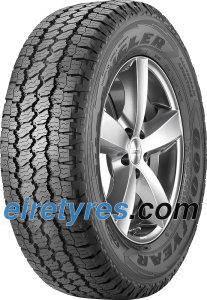
Goodyear Wrangler All-Terrain Adventure 245/75 R15C 109/107S 6PR
Goodyear
Wrangler All-Terrain Adventure
245/75 R15C 109/107S 6PR
Goodyear - Premium manufacturer of high-performance tires across all segments
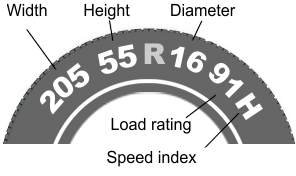
2. Ratio of tire height to tire width in%
3. Tire design: 'R' = radial tires (widely used), 'D' or '-' = diagonal tires (rare)
4. Required rim diameter for this tire in inches
5. Key figure for tire load capacity
6. Key figure for the permissible maximum speed (speed index)
7. Motorcycle tire identification, tires only approved for motorcycles
8. DOT labeling
9. Date of manufacture of the tire (week of production / year of production)
PR is an abbreviation of "ply rating". This label originally indicated the number of layers of cotton fishing line in the shell. A large number of bearings means a higher load capacity. When stronger materials were introduced for bearings, this term was removed from the actual number of bearings. Currently, a tire with 8 PR can only have four nylon linear bearings. Today, the stability of a controlled tire is expressed in terms of load capacity and speed capacity, and not in terms of the ply rating.
The efficiency class label evaluated based on customer preferences.
Delticom centralized survey results from more than 40.000 customers from 15 European countries and created this index.
3.35 |
- Manufacturer description
- Tire Label
- General Product Safety (GPSR)
Wrangler All-Terrain Adventure
The versatile All-Terrain tyre with the toughness of Kevlar® to go off-road at a moment's notice*
- Confident grip to help stay in control of the journey
- Tough and durable tyre for off-road driving performance
- 37% better mileage performance than the average of tested competitors**
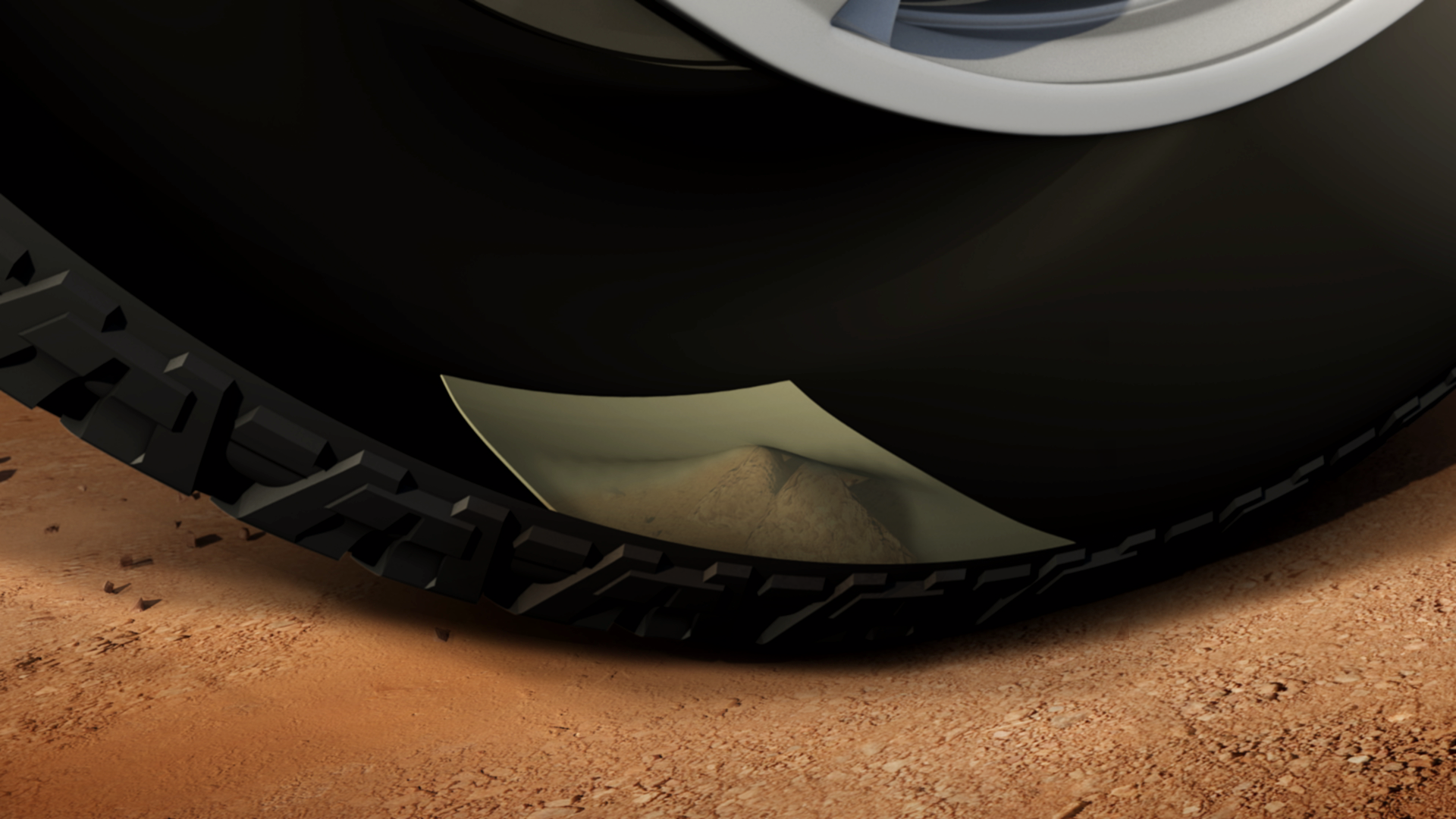
Kevlar® Reinforced Layer*
Resist punctures and cuts for confident off-road driving.
*DISCLAIMER KEVLAR USE
*Kevlar® is a registered trademark of E.I. du Pont de Nemours and Company. The following sizes of the Wrangler All-Terrain Adventure do have the Kevlar feature: | 541825: 265/60R18 110T WRL AT ADV | 547504: 255/60R20 113H WRL AT ADV LR XL | 547505: 255/65R19 114H WRL AT ADV LR XL | 574894: 255/70R18 116H WRL AT ADV LR XL FP | 582414: 255/55R18 109H WRL AT ADV XL | 582860: 255/55R19 111H WRL AT ADV XL
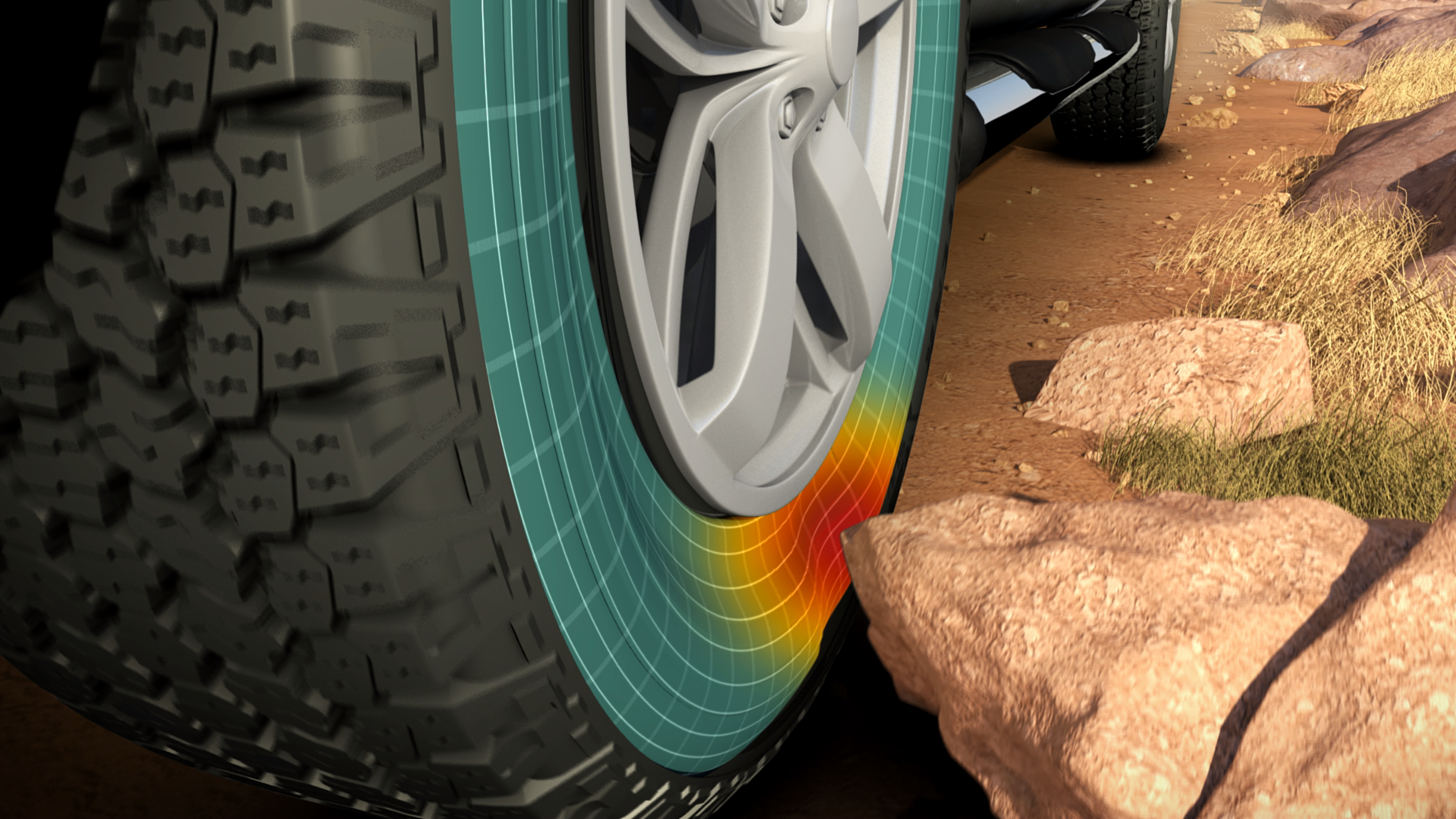
DuraWall Technology
Offers toughness and helps resist cuts in the sidewall area.
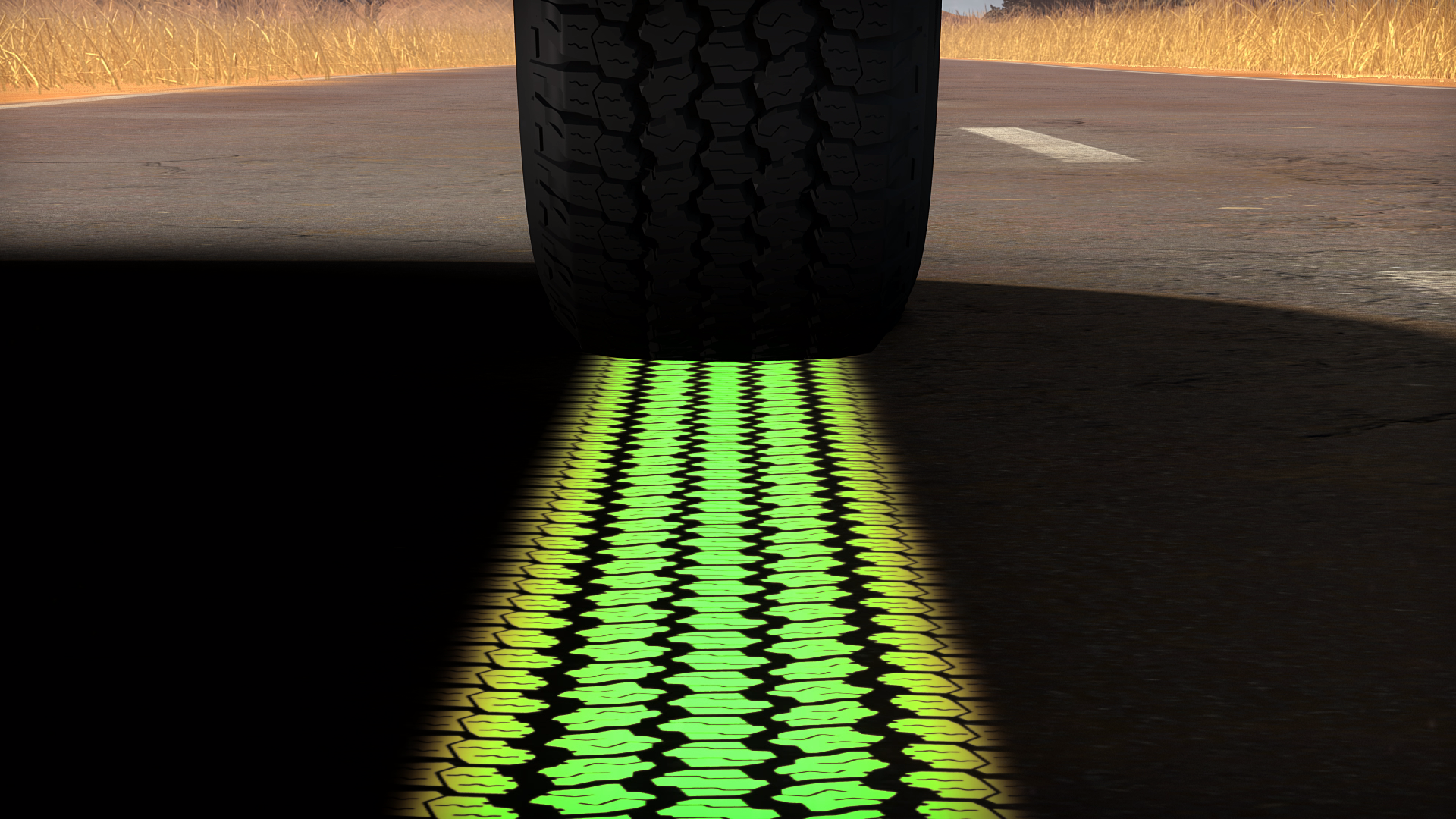
Optimized tread design
Even pressure distribution across the footprint for improved mileage.**
**DISCLAIMER
**Driven on front and rear axle, compared to the average performance of 3 competitor designs in SUV/ 4x4 segment. Tested by Dekra in Dec 2016 by order of Goodyear. Test Car Toyota Hilux 2.4- 4x4, tyre size 265/65 R17 112T/S. Test location: Dekra Testing Center (FP01B), France. Report/Test ref. 16CPB34-389, Wear limit = 1.6 mm for all grooves. Front Axle, Wrangler AT/A is 49% better and on rear Axle Wrangler AT/A is 25% better than average of competition, therefore average is 37% better than average of tested tyres.
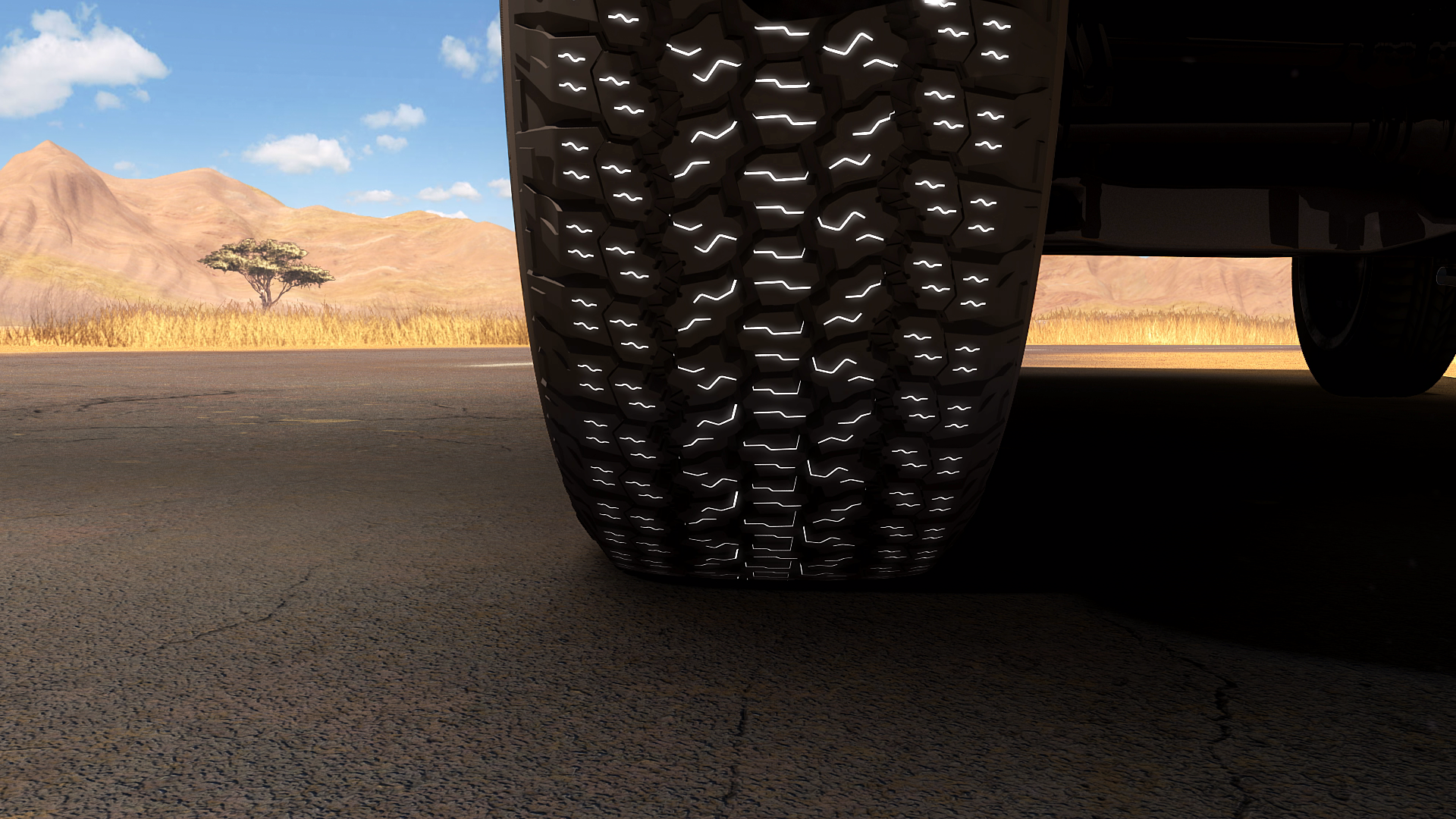
Enhanced biting edges
Biting edges create more traction between the tyre and road surface, providing confident Grip and Braking.
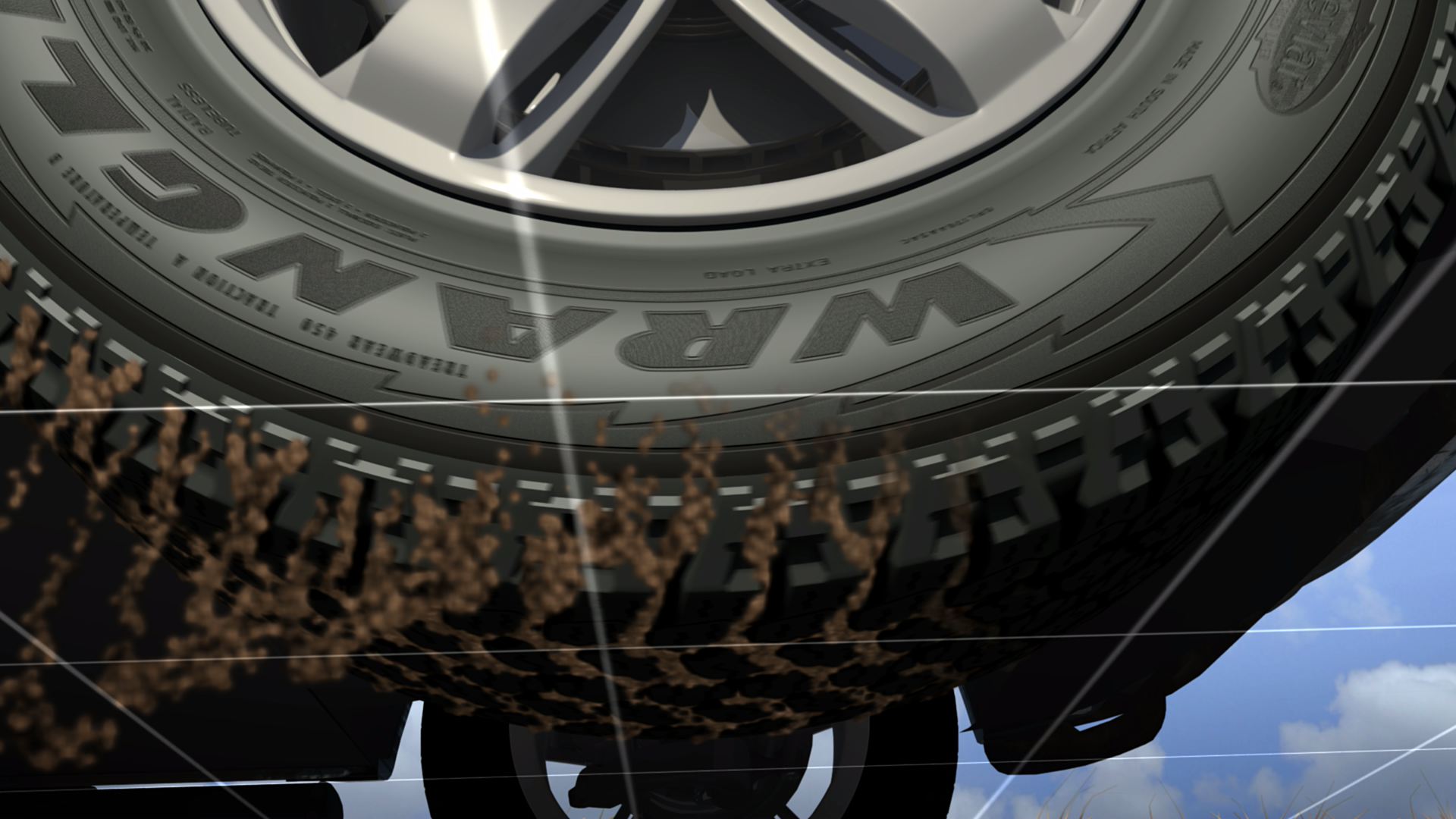
Open shoulder blocks
Helps to evacuate mud from the tread, improving off-road traction
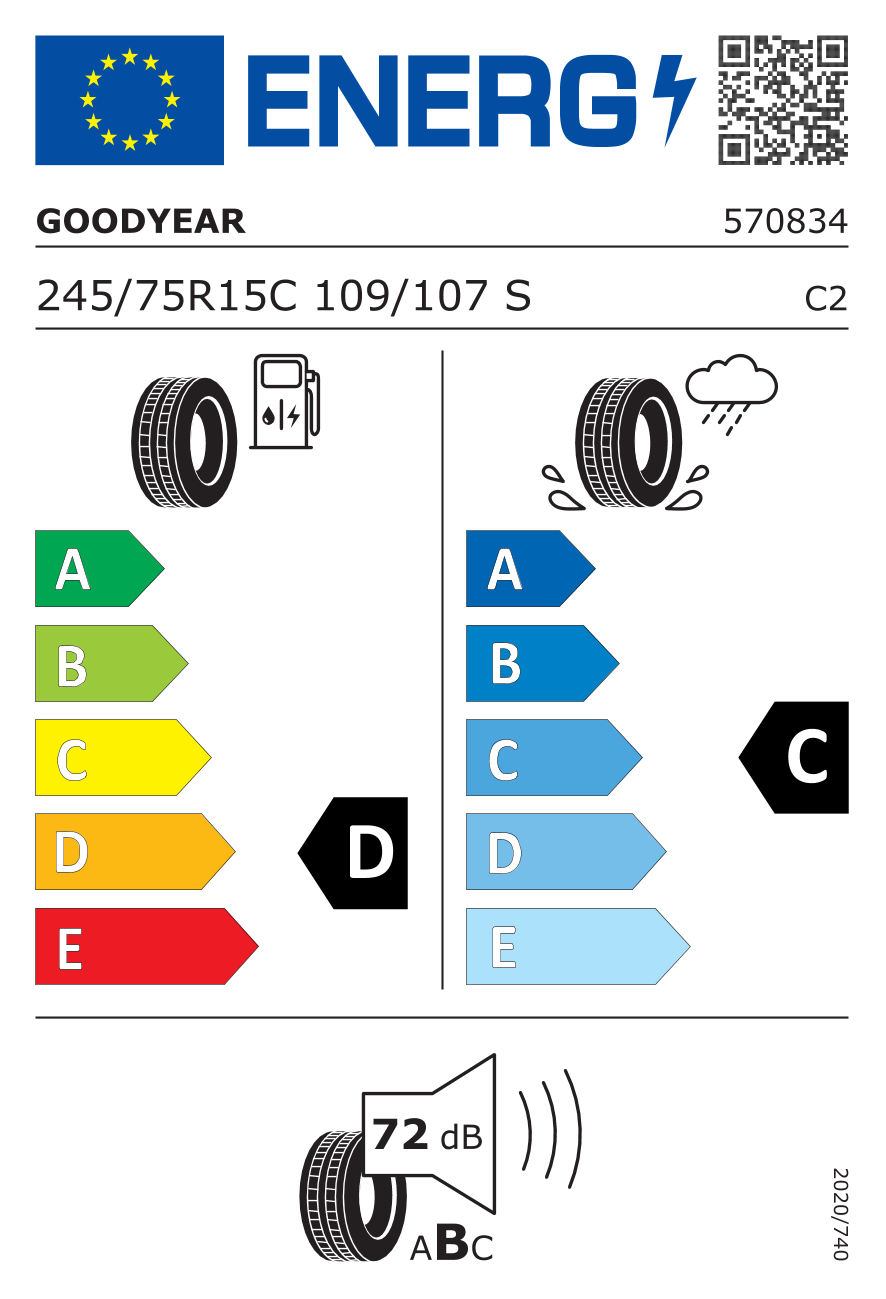
EU Tyre Label and Efficiency Classes
The Tire Labeling Ordinance specifies the information requirements on fuel efficiency, wet grip and external rolling noise from tires. In addition, reference is made to the winter properties of the product.
The EU 1222/2009 regulation that has been in force since November 1st, 2012 has been revised and will be replaced by regulation EU 2020/740 from May 1st, 2021; From this point on, new requirements apply. The rating classes for fuel efficiency, wet grip and exterior noise have been changed and the layout of the EU label has been adjusted. The manufacturer's product data sheets stored in the EU database can be downloaded via a QR code integrated into the label. Information on snow grip and ice grip is also newly included for tires that meet these criteria.
The following tires are exempt from the regulation: - tires that are designed exclusively for installation on vehicles that were first registered before October 1, 1990 - retreaded tires (until a corresponding extension of EU VO 2020/740 has taken place) - professional off - Road tires - Racing tires - Tires with additional devices to improve traction, eg studded tires - T-type emergency tires - Tires with a permissible speed below 80 km/h - Tires for rims with a nominal diameter ≤ 254 mm or ≥ 635 mm
The criteria and evaluation classes at a glance
fuel efficiency
The fuel consumption depends on the rolling resistance of the tyres, the vehicle itself, the driving conditions and the driving style of the driver. The measured rolling resistance (rolling resistance coefficient) of the tire is divided into classes A (highest efficiency) to E (lowest efficiency).
If a vehicle is completely equipped with class A tires, a consumption reduction of up to 7.5%* is possible compared to class E tyres. In the case of commercial vehicles, it can even be higher.
(Source: European Commission Impact Assessment
* when measured according to the test methods set out in Regulation (EU) 2020/740)
Please note:
Fuel consumption depends to a large extent on your own driving style and can be significantly reduced by driving in an environmentally friendly manner. Tire pressure should be checked regularly to improve fuel efficiency.
wet grip
Wet grip is divided into classes A (shortest braking distance) - E (longest braking distance).
If a car is equipped with class A tires, compared to class E tires, a braking distance of up to 18 m can be reduced when braking from 80 km/h (on a road surface with average grip).*
*Source: wdk Economic Association of the German Rubber Industry eV
Please note:
Traffic safety depends to a large extent on your own driving style. The stopping distances must always be observed. Tire pressure should be checked regularly to improve wet grip.
External rolling noise
The noise emitted by a tire affects the overall volume of the vehicle and affects not only your own driving comfort, but also the noise pollution of the environment. In the EU tire label, the external rolling noise is divided into 3 classes from A (lowest rolling noise) - C (highest rolling noise), measured in decibels (dB) and compared with the European noise emission limit values for external tire rolling noise.
A
The pictogram with the classification "A" indicates that the tire's external rolling noise is more than 3 dB below the EU limit value in force until 2016.
B
The "B" classification means that the tyre's external rolling noise is up to 3 dB below or equal to the EU limit value in force until 2016.
C
The classification "C" indicates that the specified limit value is exceeded.
Goodyear S.A. Innovation Center
Avenue Gordon Smith, 7750, Colmar-Berg, Luxembourg