







%service-partner-advantages-list%
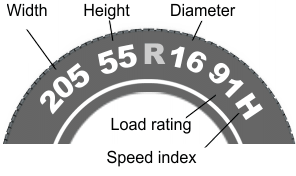
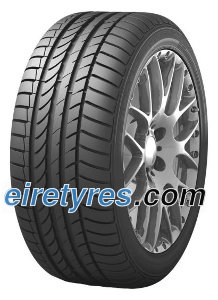
Dunlop SP Sport Maxx TT DSROF 245/40 R17 91W *, runflat
Dunlop
SP Sport Maxx TT DSROF
245/40 R17 91W *, runflat
Dunlop - Tyre manufacturer from Japan. High-quality product in the premium price segment.
The efficiency class label evaluated based on customer preferences.
Delticom centralized survey results from more than 40.000 customers from 15 European countries and created this index.
3.35 |
- Manufacturer description
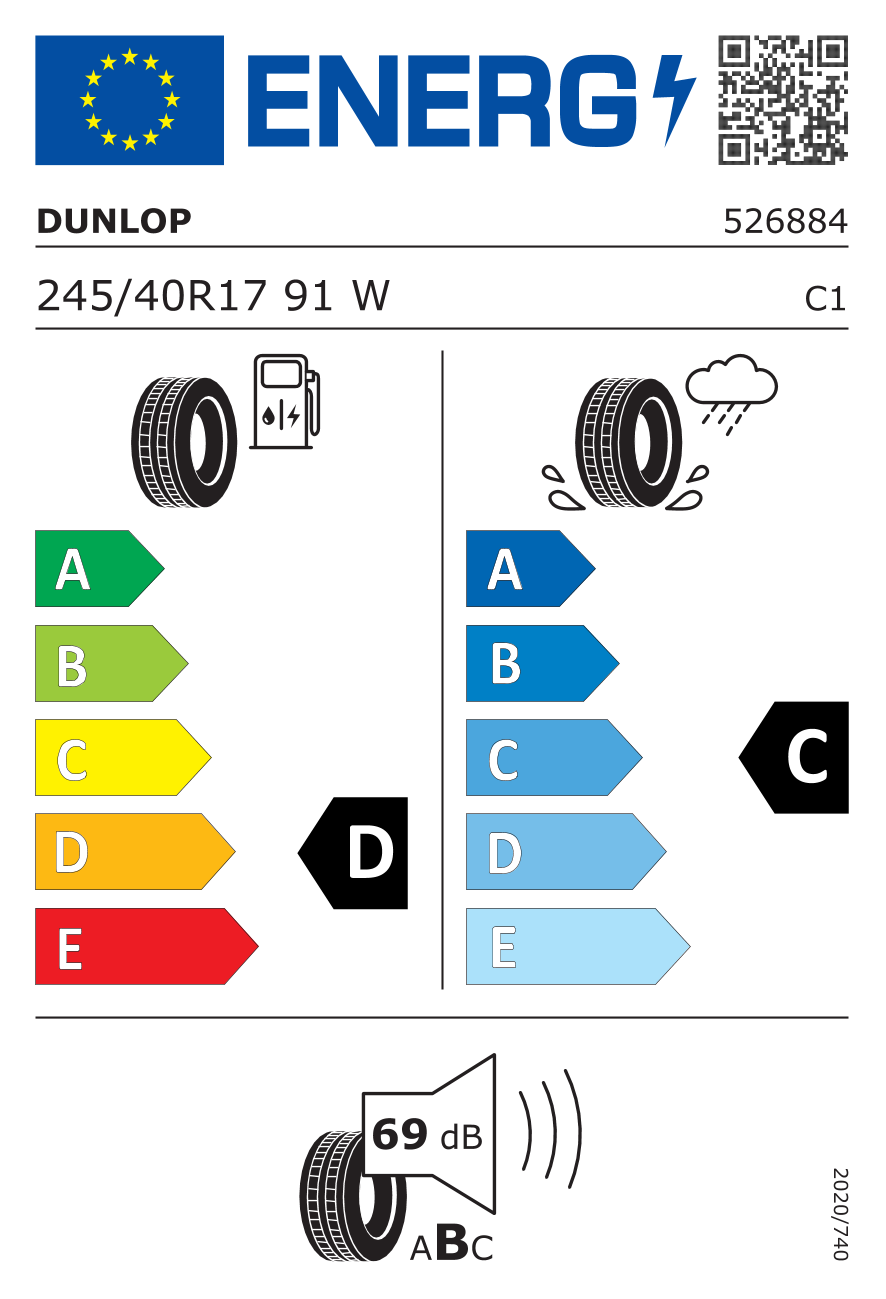
- Tire Label
- General Product Safety (GPSR)
Precision handling, powered by DuPont™ Kevlar®
For high performance sports cars.
Driving precision with DuPont™ Kevlar®. The Dunlop SportMaxx TT is powered by DuPont™ Kevlar®.
Description:
Drivers of high performance cars want to experience the dynamics of their vehicle. To experience this requires superior dry handling, high-speed stability, excellent acceleration and reduced braking distances. Dunlop has created the SP SportMaxx TT ultra high performance tyre to provide outstanding grip and driving pleasure. Precision handling, powered by DuPont™ Kevlar® - for high performance sports cars: Driving precision with DuPont™ Kevlar®, superb handling and cornering, excellent grip and braking.
Technology (Features):
- Multi Radius Tread Technology for significantly better control
- Touch Technology for a total driving experience
- Kevlar Apex for improved driving precision
Consumer benefits:
- Great steering response at high speeds
- Very good wear resistance
- Rim protection that protects expensive alloys from kerbing
- Excellent acceleration and braking performance
- Very good control on dry and wet surfaces
Excellent grip and braking ability. Enjoy superior grip and shorter braking on wet and dry, thanks to a unique tread compound containing motorsports derived nanoparticles. The asymmetric groove arrangement enhances grip further, giving you more control at motorway speeds.
Driving precision with Kevlar® technology. The SP SportMaxx TT benefits from DuPont™ Kevlar® technology to bring performance to a higher level. This tough compound creates a stiffer sidewall, leading to improved driving precision. Dunlop Touch Technology ensures high levels of responsiveness and road feedback.
Superb handling and cornering. The tread design of the SportMaxx TT manages the pressure across the tyre more effectively, improving handling performance on wet and dry. Smooth transitions from straight to curve give you more time to feel the road and react, even at high speeds. Stiff shoulder blocks add extra stability when cornering.
Specific bead seat system. Strengthens the link between tyre and rim for a more precise driving experience. Like the grip between your hand and the steering wheel, the Specific Bead Seat System enhances control and conveys outstanding road feedback. Benefits Enhanced road feedback; greater stability and precision.
Silica-Plus Compound. A motorsport derived tread compound that delivers high levels of grip, particularly on wet roads and in low temperatures.Benefits Superb braking and acceleration performance; high grip in wet and cold-weather conditions; low wear and tear.
Nanoparticles. Tread compound mixed with nanoparticles of racing carbon black. These nanoparticles are combined with resin and polymers to provide excellent adhesion on dry and wet roads.Benefits Superior dry and wet grip, precise braking, improved wear.
Jointless Belt (JLB). A Hybrid Overlay Technology that reduces circumferential deformations at high speeds.Benefits Superior high speed stability.
Maximum Flange Shield (MFS). A rim flange protection system. MFS employs a profile of rubber that runs around the circumference of the tyre above the wheel flange. This creates a protective buffer zone.* Benefits Protects expensive alloy wheels from kerbing.* Only available in select sizes.
Variable land to sea ratio. Asymmetric tread design with a variable land to sea ratio delivers high levels of aquaplaning resistance. The massive outer shoulder block ensures rapid and turbulence free water drainage, while also ensuring outstanding cornering stability.Benefits High aquaplaning resistance; increased road contact; enhanced cornering stability and steering precision.
Asymmetric Tread Design. Asymmetric tread design provides improved handling and aquaplaning resistance. The continuous center rib increases stability and precision. The asymmetric groove arrangement enhances grip on wet and dry surfaces.Benefits Improved performance on straight lines and around corners.
Flatter tread profile. The new generation of Dunlop tyres features a flatter tread profile with a 4-8% bigger contact patch, depending on size and type of tyre. A bigger contact patch delivers more stability and enhanced road feedback, allowing tires to respond quickly and precisely.Benefits Increased stability and steering precision; reduced heel and toe wear; excellent cornering stability and precision; superior dry grip.
Multi Blade System. Winter driving conditions can vary greatly. From cold and dry to snow or sleet, these conditions make very high demands on a tyre. Dunlop’s multiple blade system meets this challenge head on, with different types of blades for varying winter road conditions.Benefits Consistent performance in various winter conditions.
Dual Silica Compound. This compound improves acceleration performance and promotes low wear and tear.Benefits Superb braking and acceleration performance.
EU Tyre Label and Efficiency Classes
The Tire Labeling Ordinance specifies the information requirements on fuel efficiency, wet grip and external rolling noise from tires. In addition, reference is made to the winter properties of the product.
The EU 1222/2009 regulation that has been in force since November 1st, 2012 has been revised and will be replaced by regulation EU 2020/740 from May 1st, 2021; From this point on, new requirements apply. The rating classes for fuel efficiency, wet grip and exterior noise have been changed and the layout of the EU label has been adjusted. The manufacturer's product data sheets stored in the EU database can be downloaded via a QR code integrated into the label. Information on snow grip and ice grip is also newly included for tires that meet these criteria.
The following tires are exempt from the regulation: - tires that are designed exclusively for installation on vehicles that were first registered before October 1, 1990 - retreaded tires (until a corresponding extension of EU VO 2020/740 has taken place) - professional off - Road tires - Racing tires - Tires with additional devices to improve traction, eg studded tires - T-type emergency tires - Tires with a permissible speed below 80 km/h - Tires for rims with a nominal diameter ≤ 254 mm or ≥ 635 mm
The criteria and evaluation classes at a glance
fuel efficiency
The fuel consumption depends on the rolling resistance of the tyres, the vehicle itself, the driving conditions and the driving style of the driver. The measured rolling resistance (rolling resistance coefficient) of the tire is divided into classes A (highest efficiency) to E (lowest efficiency).
If a vehicle is completely equipped with class A tires, a consumption reduction of up to 7.5%* is possible compared to class E tyres. In the case of commercial vehicles, it can even be higher.
(Source: European Commission Impact Assessment
* when measured according to the test methods set out in Regulation (EU) 2020/740)
Please note:
Fuel consumption depends to a large extent on your own driving style and can be significantly reduced by driving in an environmentally friendly manner. Tire pressure should be checked regularly to improve fuel efficiency.
wet grip
Wet grip is divided into classes A (shortest braking distance) - E (longest braking distance).
If a car is equipped with class A tires, compared to class E tires, a braking distance of up to 18 m can be reduced when braking from 80 km/h (on a road surface with average grip).*
*Source: wdk Economic Association of the German Rubber Industry eV
Please note:
Traffic safety depends to a large extent on your own driving style. The stopping distances must always be observed. Tire pressure should be checked regularly to improve wet grip.
External rolling noise
The noise emitted by a tire affects the overall volume of the vehicle and affects not only your own driving comfort, but also the noise pollution of the environment. In the EU tire label, the external rolling noise is divided into 3 classes from A (lowest rolling noise) - C (highest rolling noise), measured in decibels (dB) and compared with the European noise emission limit values for external tire rolling noise.
A
The pictogram with the classification "A" indicates that the tire's external rolling noise is more than 3 dB below the EU limit value in force until 2016.
B
The "B" classification means that the tyre's external rolling noise is up to 3 dB below or equal to the EU limit value in force until 2016.
C
The classification "C" indicates that the specified limit value is exceeded.
Dunlop Tyre Europe GmbH
Berliner Straße 74–76, 63065 Offenbach am Main, Deutschland