 %service-partner-advantages-list%

0818000052 (Mo-Fr 7am-10pm)
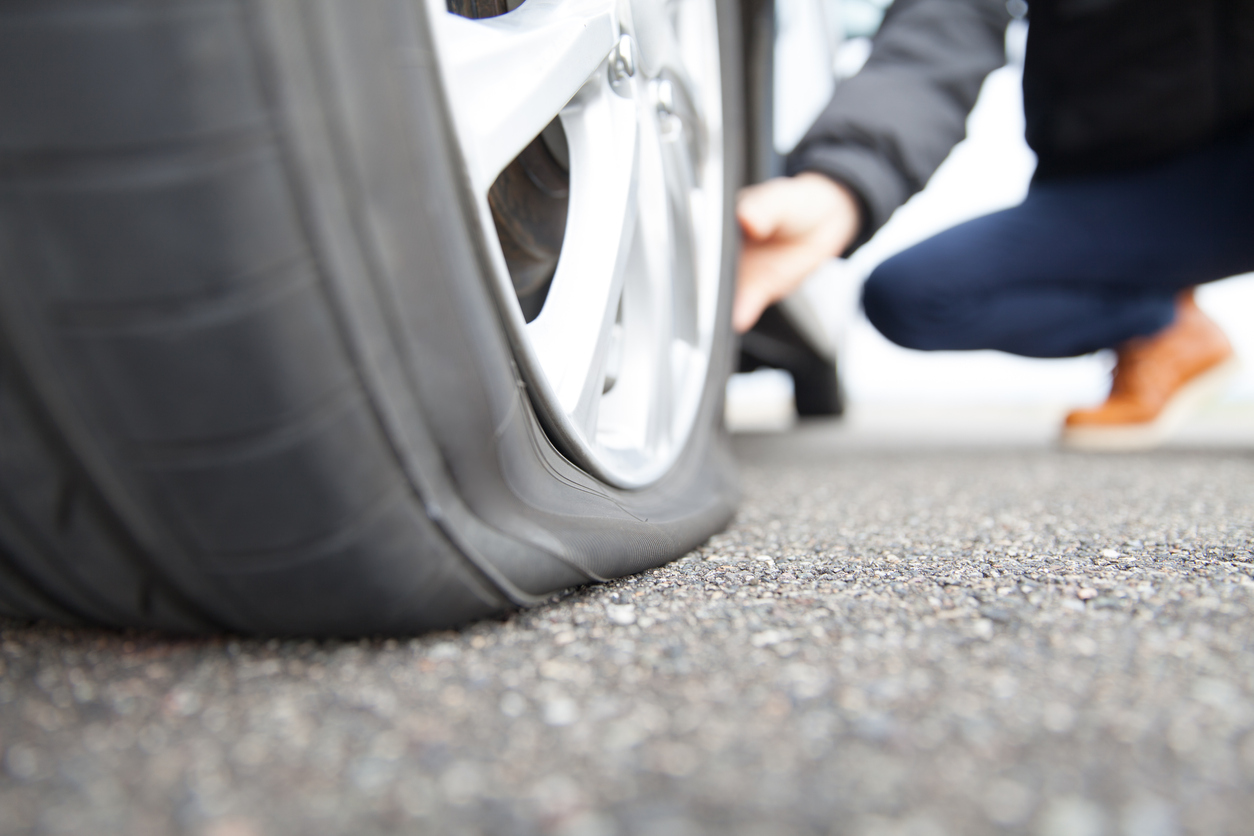
A flat tyre is a tyre that has lost its air pressure and therefore can no longer provide adequate support. This can happen for various reasons, such as a foreign object penetrating the tire or overloading the tire. In any case, it is important to address a flat tire as soon as possible, as it can lead to an accident.
Copyright: okugawa @iStock
If you suspect that your tire is flat, you should check it to ensure it is safe. Signs of a flat tyre include a slow loss of air, causing the tire to look deflated and uneven. The tire may also feel different while driving or make a loud noise. If the tyre is flat, it should be changed as soon as possible to avoid accidents.
A flat tyre can occur for various reasons, including:
It is important to regularly check the tyre pressure, age, and condition of the tires.
No, it is not advisable to drive with a flat tyre. A flat tire can cause the vehicle to become uncontrollable and increase the risk of an accident. Therefore, it is important to stop the vehicle as soon as safely possible and either change the tire or have it repaired by a professional at the nearest workshop. If you must continue driving, move the vehicle slowly and carefully, and be particularly cautious. Under no circumstances should you attempt to drive at high speeds or take sharp turns.
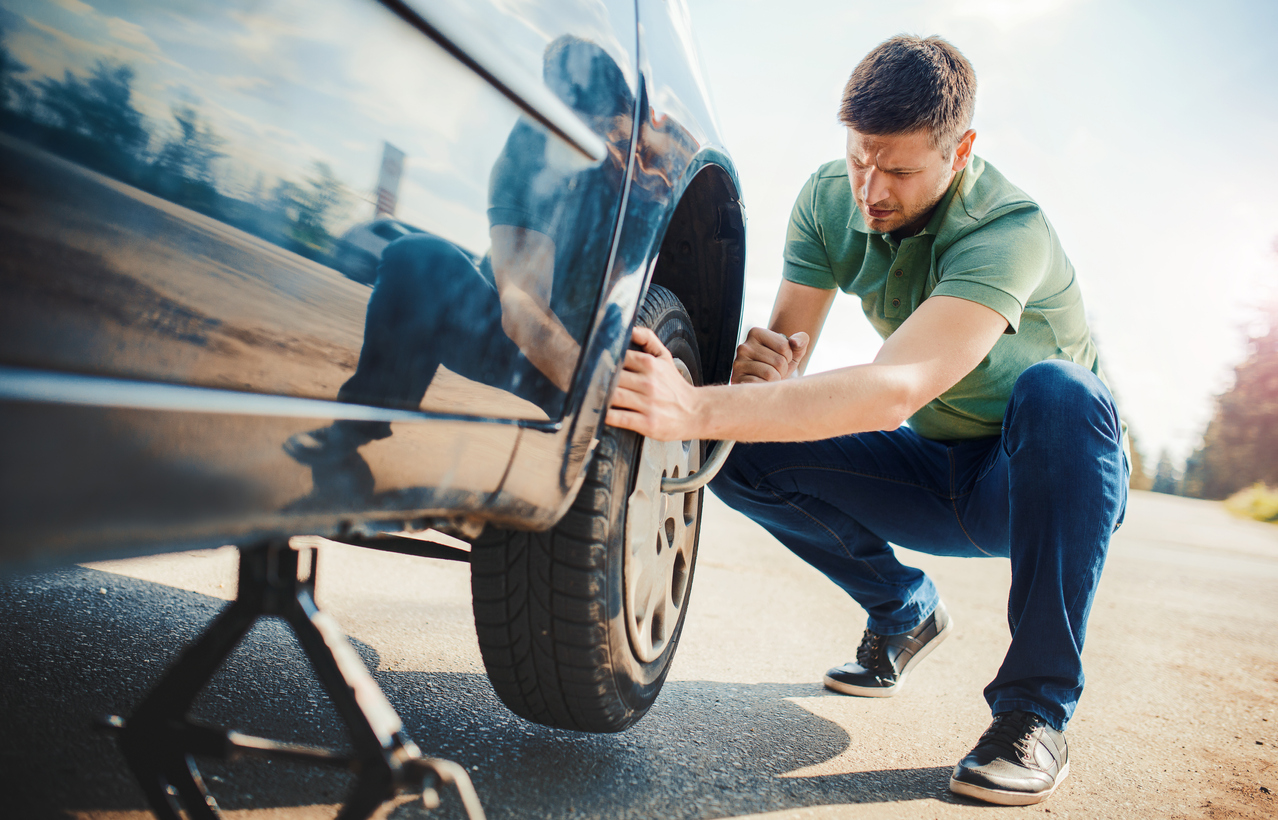
If you find yourself with a flat tyre while on the road, it's important to act quickly. Here are some steps you can take in such a situation:
Copyright: Bobex-73 @iStock
If you don't have a spare tire but find yourself with a flat tire, there are a few options to consider. First, you can try to repair the tire by patching the puncture using a tire repair kit. This can temporarily fix the problem until you can have the tire professionally repaired or replaced at the nearest workshop.
If repair is not possible or the tire is too damaged to drive safely, you'll need to find another way to reach your destination. One option is to call a tow service to take your vehicle to a workshop or a location of your choice. If this is not possible, you might also consider borrowing a spare tire from someone nearby.
If you experience a flat tire on the highway, the first thing to do is find a safe place to pull over and change the tire. It's important to activate your vehicle's hazard lights to alert other drivers. If possible, move to a parking area or the nearest exit. If this is not possible, you can pull over to the right shoulder and change the tire, provided it is safe and there is enough space. Stay vigilant to avoid potential dangers.
It depends on the type of insurance you have and whether the cost of new tires is covered under your insurance policy. Generally, insurance does not cover the cost of new tires unless you have a specific tire insurance policy. If you're unsure, it's best to contact your insurer directly to ensure you're covered.
In UK, it is generally allowed to repair a car tire as long as the patch is applied correctly and does not pose a danger to the driver or other road users. However, it's important to note that many tire manufacturers and dealers consider patching a violation of warranty terms and may not cover damages caused by a repaired tire. For this reason, we recommend visiting the nearest workshop for any tire damage to ensure the tire is properly repaired.
To repair a tire, you'll first need a repair kit, which can be purchased at any well-stocked auto parts store or hardware store. The repair kit should include a patch kit, an air compressor or hand pump, and possibly a sealant bottle.
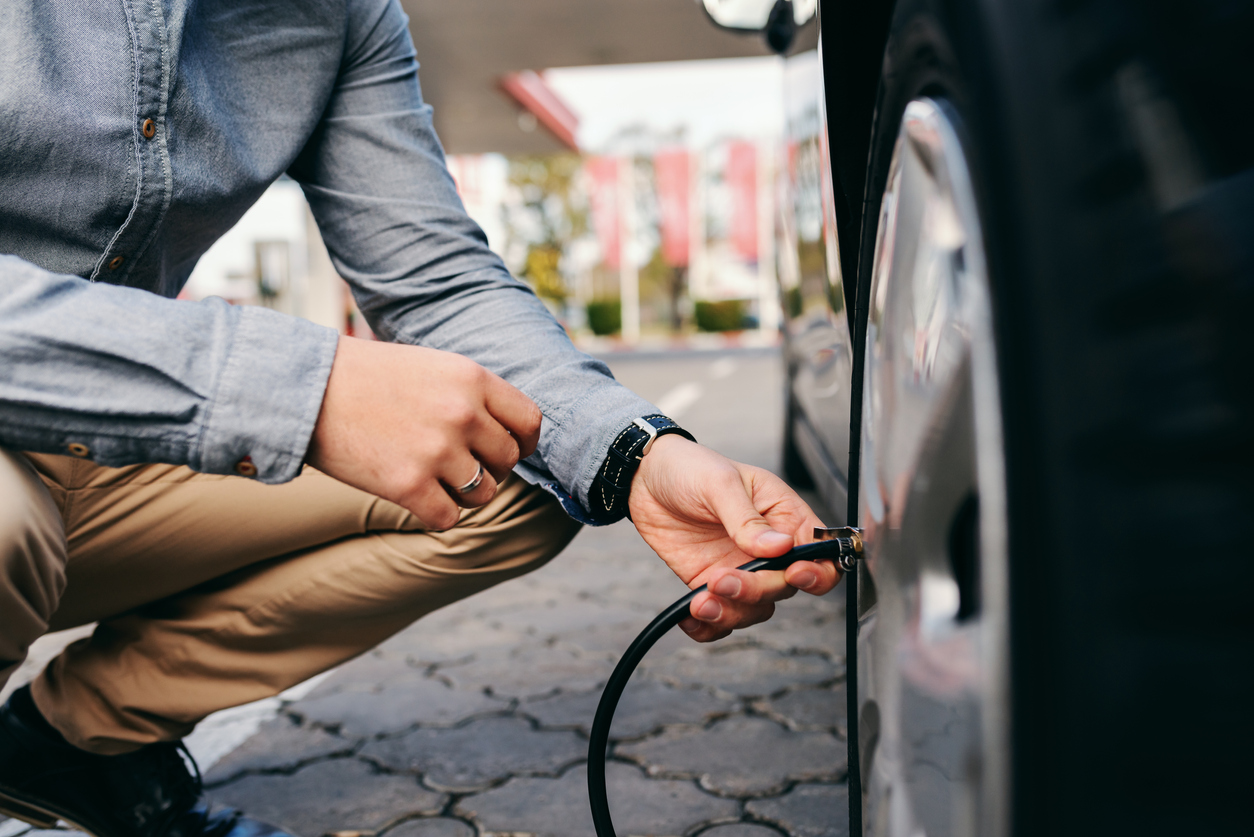
Copyright: dusanpetkovic @iStock
If a faulty valve is the cause, you'll generally need a replacement valve, a valve tool, and an air pump.
There are a few things you can do to avoid a flat tire. First, always make sure your car tires are properly inflated to the recommended air pressure. Also, check them for any damage or signs of wear and replace them as needed. If you are driving long distances, it is advisable to keep a tire repair kit and an air compressor in your car in case you do encounter a flat tire.
Runflat tires are tires that provide sufficient comfort and stability even when they lose air. This is made possible by special technologies in the tire that allow you to continue driving without air. This can be particularly advantageous in situations where changing a tire would be difficult or dangerous, such as on a highway or in remote areas. Runflat tires also offer a degree of safety by keeping the vehicle stable and preventing it from skidding if the tire suddenly loses air.
We offer Runflat tires at affordable prices. Free shipping is available for orders of two or more tires, either to your home or directly to a workshop. Order today and never worry about flat tires again.




 %service-partner-advantages-list%
Quantity: %entry-quantity%
Price per unit: %entry-base-price%
Price per unit: %entry-total-price%